
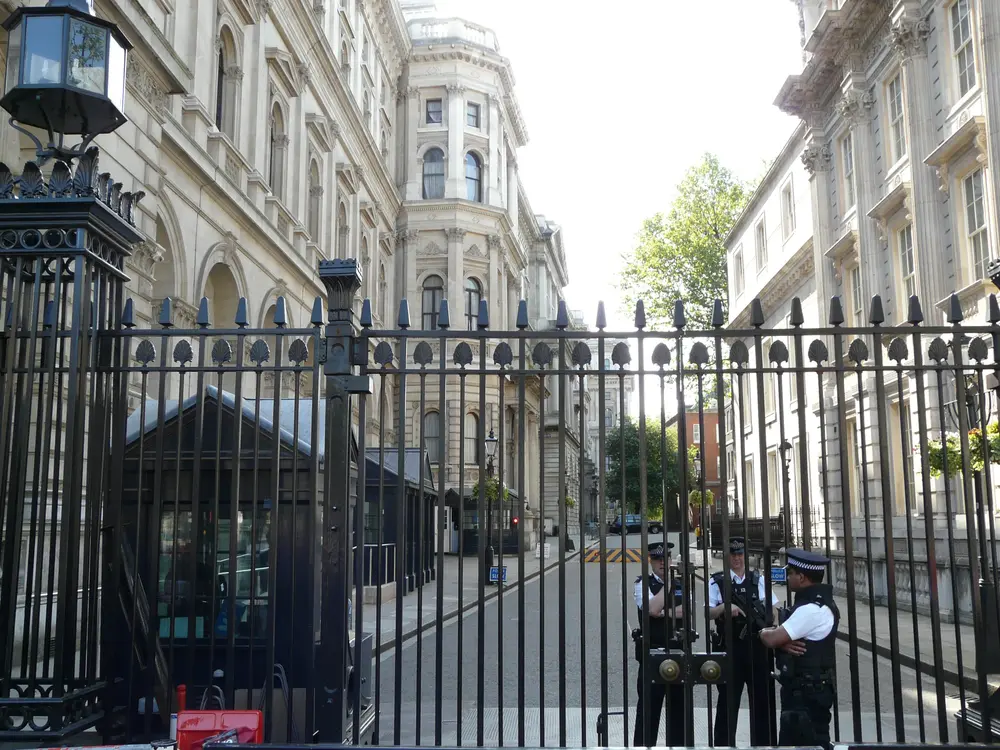
Everyone knows about Number 10 Downing Street – the home of the British Prime Minister. Some also know that the Chancellor on paper lives at Number 11. But what’s the story with the rest of the street? Curiosity got the better of me and off I went to research it
🏛️ Key properties on Downing Street
10 Downing Street
- This acts as the official residence and office for the UK Prime Minister
- Used for:
- Cabinet meetings
- Official receptions
- Press briefings
- The house is internally connected to both No. 11 and No. 12
11 Downing Street
- Official residence of the Chancellor of the Exchequer
- Traditionally the Chancellor lives here, though residents sometimes swap with No. 10 depending on family and space needs
- This house has the largest private living space of the three
12 Downing Street
- Formerly the Chief Whip’s office
- Now mainly used as:
- Offices
- Press and communications space
- Also connected internally to Nos. 10 and 11
Other numbered buildings (1–9 Downing Street)
- Used almost entirely as government offices
- Home to:
- Policy units
- Administrative staff
- Security and support services
- These are all non residential properties
🔒 Security & layout notes
- The street is gated and heavily guarded
- Buildings behind the façades are all much larger than they appear from the front
- Many of the properties on the street are internally linked, forming a single secure government complex
📜 Ownership
- All of the buildings on Downing Street are owned by the Crown Estate and managed on their behalf by the government
- As such, they are not private property and cannot be bought or sold


