
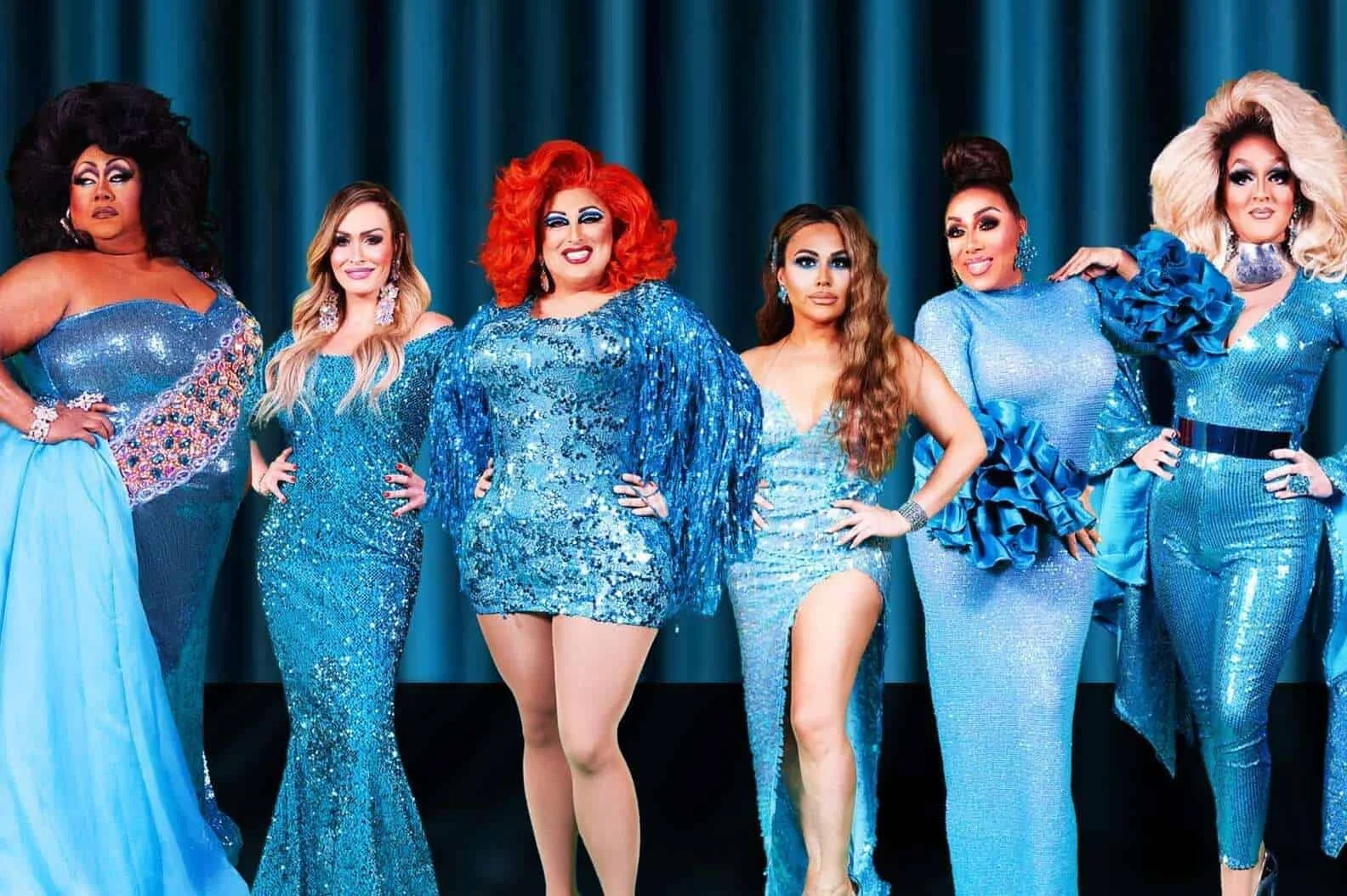
Now this is definitely one to file in the pile of random facts. The thought came to me while watching TV on an evening and I thought I really must have a google and find out. Don’t ask me why, I just got curious!
You may hear that DRAG stands for “Dressed Resembling A Girl.” That’s I’m afraid to say whilst sounding very plausible and logical is actually a backronym, a phrase invented after the fact. There’s no historical evidence at all to support a claim that it was the original meaning.
Ok, so what is the most widely accepted origin?
In 19th-century British theatre, men traditionally also played women’s roles. For this they wore long dresses and skirts, the hems of which would drag along the floor. Performers and theatre slang referred to this as “drag”, it was seen at the time to be short for “dragging skirts”.
By the late 1800s, “drag” was already documented as slang for:
- Men wearing women’s clothing in performance
- The clothing itself
Eventually, it then also became widely adopted for the act or style of a cross gender performance. This is backed up by the fact that the Oxford English Dictionary traces “drag” in this sense to originating from theatre slang from the 1870s.
The evolution of drag
- At first it referred mainly to costume rather than the act or performance.
- Over time, it then grew and morphed to also mean a performance style. This style would often be exaggerated, theatrical, and playful with gender.
- Today, drag includes many forms: drag queens, drag kings, bio queens, club kids, and more.


