
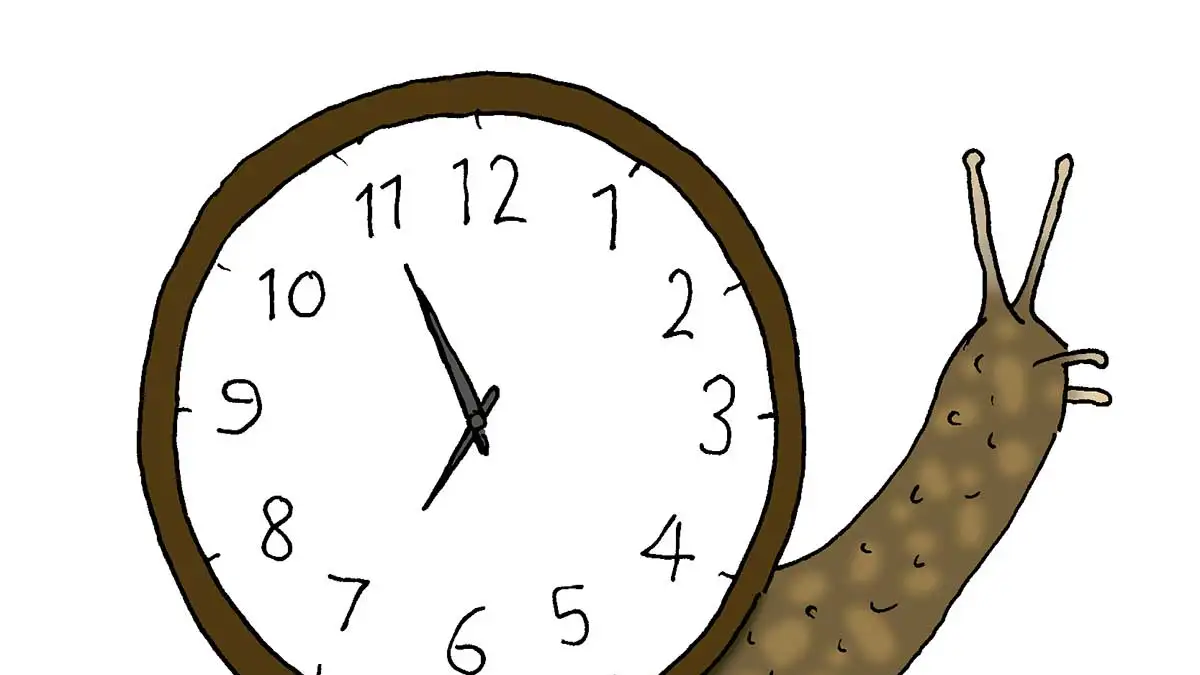
Whilst out for a walk on Saturday, Mrs PubChat made the statement “I can’t believe it is nearly x already” – this got us into a debate about why time seems to go faster as you get older. It turns out, having done some investigating of my own that there is genuine science behind it, and it’s not just us going mad.
The feeling that time speeds up as we age is not related to clocks – there’s actually some very interesting neuroscience behind it. It’s about how the brain encodes experience. Several of our body’s neural systems are involved
If you are looking for a simpler explanation we have published one with a bit less science involved over on our sister site – RJC82
1) The Hippocampus: The Time-Stamping System In Your Brain
The hippocampus is a key part of your brain in all of this and plays a central role in forming what are known as episodic memories, that is memories of events in a specific time and place combination.
- It binds together for us what happened, where, and when.
- New and novel experiences activate it strongly.
- Repeated routines activate it much less.
When you’re young, the hippocampus is constantly encoding new environments and situations.
As you age:
- Life sadly for us all becomes a lot more predictable.
- The hippocampus detects fewer patterns that we would regard as being new or different.
- Fewer richly encoded memories means as a consequence that time feels compressed.
Important: Time perception is largely an issue of memory density in your brain. The more encoded events you have the longer the feeling of time.
2) Dopamine and Novelty Detection
Dopamine isn’t just about pleasure — it is also about prediction error – the gap between what you expect and what actually happens.
The ventral tegmental area of your brain and the striatum both release dopamine when something is exciting, surprising or new.
In childhood:
- The world constantly defies expectations as we still have a lot to learn.
- Dopamine spikes will consequently occur very frequently.
- Your brain generates strong learning signals due to the sheer amount that is going on.
With age:
- Fewer surprises will appear to happen as we all get wiser to the world.
- As such we will generally experience a reduced dopaminergic novelty response.
Whether we like it or not, a sad fact of getting older is that there is also a gradual age-related decline in dopamine receptor density, which may subtly affect how vividly new experiences are encoded.
3) The Prefrontal Cortex and Temporal Organisation
The prefrontal cortex helps organise experiences into coherent timelines.
As we steadily get older:
- We rely more on mental shortcuts
- The brain starts to just categorise experiences instead of encoding them in detail.
- Days can easily get grouped into “another workday” instead of distinct episodes due to their overall familiarity and a level of repetitiveness.
This all serves to increase efficiency — but ultimately it will reduce subjective length.
4) The Basal Ganglia and Internal Clock Models
Neuroscientists have done research in this area and suggest that time perception involves a complex web of oscillatory activity in circuits which like:
- basal ganglia
- cerebellum
- prefrontal cortex
Dopamine that we talked about earlier is known to modulate all of these circuits.
Lower dopamine levels as well get older mean that fewer “time pulses” are accumulated meaning that time intervals may well feel shorter.
This is also why dopamine-altering conditions such as Parkinson’s disease are known to distort an individual’s perception of time
5) Emotional Intensity Expands Time
The amygdala has been proven to strengthen your memory encoding when events are emotionally charged.
This is why:
- Accidents feel slow in the moment.
- Childhood summers feel long in memory.
- Major life events stand out vividly.
As life starts to stabilise emotionally, fewer high-arousal experiences may contribute to a feeling of temporal compression.
6) Prospective vs Retrospective Time (Two Different Systems)
Prospective timing (while something is happening):
- Influenced by attention and dopamine.
- When you focus on time, it slows down.
Retrospective timing (looking back):
- Based on how many memories were stored.
- More memory markers = longer perceived duration.
A routine year has fewer markers → feels shorter in retrospect.
7) Brain Efficiency Increases — But Richness Decreases
Young brains:
- Have a high neural plasticity
- Predictive models in the brain are much less developed and as such are slowe
- Greatly increased raw sensory intake
Adult brains:
- Are highly predictive due to age and experience
- Much more energy efficient due to a perception of feeling wiser and more experienced
- Consequently have a much compressed processing level
Predictive processing by the brain reduces the level of surprise — and surprise is what stretches time.
A Fascinating Insight
If you fill a year with:
- New skills
- New environments
- Deep focus
- Emotional intensity
That year will feel longer in memory.
In other words, subjective time is expandable.


