
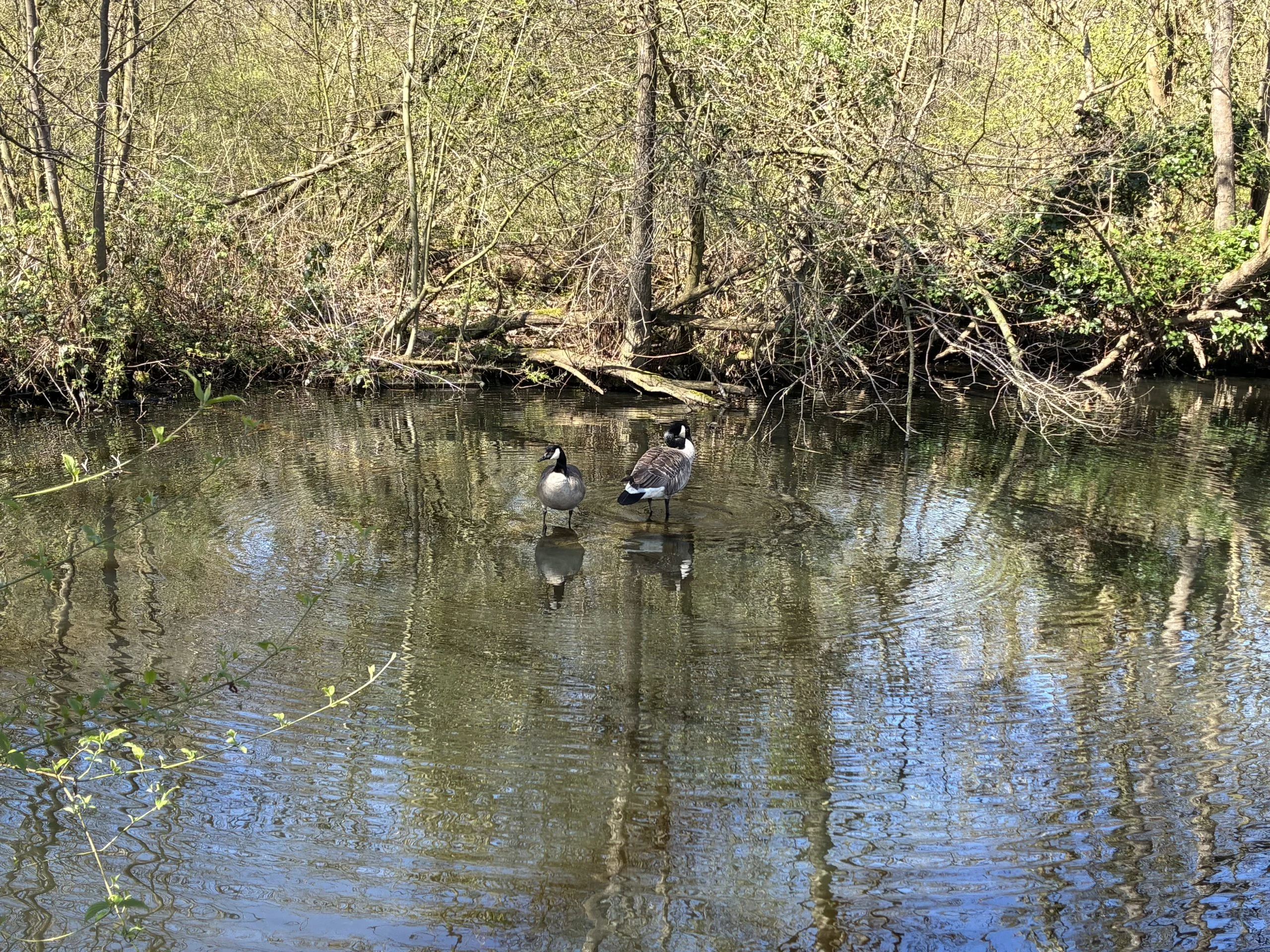
The other week, I was out for a walk at Castle Acre with Mrs PubChat and we were going along the River Nar, when I started to wonder. What makes a river a river? Why not a stream? And why not a canal?
Lets start with the easy part of the answer. It’s not a canal, because a canal is a man made, manually created waterway. You will normally find that canals are constructed to allow boats to travel a specific route, were designed originally to transport goods, or redirect water from one place to another.
Rivers and streams however are entirely naturally formed and not man made in anyway. Often having carved their own routes over 100 of years and continuing to naturally evolve.
So what separates a river and a stream? The River Nar when it goes past Castle Acre is not very big, which is what got me wondering.
Size and Depth
- Streams are generally smaller, shallower, and narrower. You can often wade across a stream, or in some cases, even hop right over it.
- Rivers are significantly larger, wider, and deeper. They contain a massive volume of moving water and usually require a bridge, boat, or serious swim to cross.
The Flow and Lifespan
- Streams will often only be short lasting or intermittent. As a consequence of this you may well find that they might only flow after a heavy rainstorm or during the spring snowmelt, going to dry up completely during the summer with the warmer weather and the level of the surrounding water table reducing.
- Rivers are almost always perennial. Typically you will see that they feature a permanent and continuous flow of water all year round, they are also normally fed by multiple constant sources of water.
The Water Hierarchy – Channels and Tributaries
This may be best illustrated if you think of the water system like a tree.
- Streams are the smaller branches. They are often tributaries—meaning they flow into other bodies of water such as rivers and drains rather than directly into the sea.
- Rivers are the main trunk. A river is typically formed by the flow from multiple smaller streams merging into one larger flow over the course of the river’s journey. A river will collect all that water on its route and ultimately will carry it all on to a major endpoint, such as a lake, a sea, or the ocean.


