
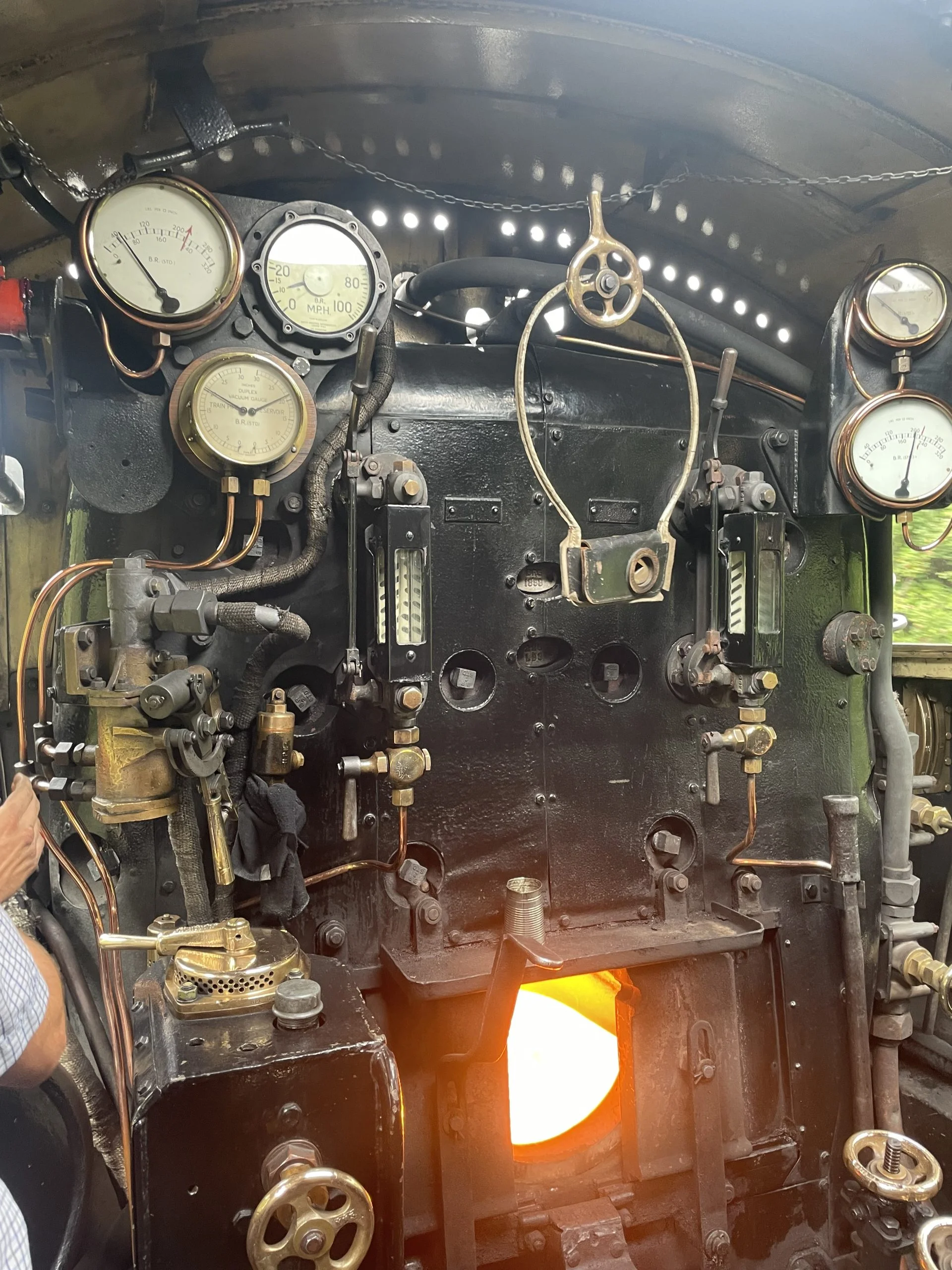
Everyone talks about the golden era of steam, and also the sense of nostalgia and romance that you find associated with it. And to be fair, I get it, watching steam powered machinery is both impressive and fascinating. BUt how does it actually work?
Steam Engines: Step by Step
Creating High-Pressure Steam:
Fuel, typically coal, wood, or oil is lit and used to create a fire in a firebox for the purpose of heating up water that is contained inside a heavy steel boiler. As the water boils, it turns into steam, this process of turning into steam sees the water expanding over 1,700 times in volume and as such it builds up immense pressure inside the sealed boiler.
Directing the Flow:
The high-pressure steam travels into a steam chamber. Inside the chamber, a sliding valve opens a port (an inlet hole). This process then allows steam to enter one side of a sealed cylinder.
Pushing the Piston:
As the steam enters the cylinder, it expands rapidly and pushes against a tight-fitting disk contained within the cylinder which is most commonly known as a piston. This has the effect of forcing it to move to the far end of the cylinder.
Reversing and Exhausting:
As the piston reaches the end of its movement, there are a series of linkages that are connected to the main shaft which pull the slide valve back. This then acts to shift the steam flow to the opposite side of the piston. Simultaneously opening an exhaust port to vent the cool, spent steam out through the chimney.
Turning Straight Lines into Rotational Power:
The back-and-forth linear movement of the piston rod connects to a crank rod. This is in turn attached off-center to a wheel or axle. In the same principle as you have when you are pedaling a bicycle, this then turns the basic back-and-forth motion into continuous rotational motion. A heavy flywheel then also helps to keep the engine spinning and rotating smoothly past the transition points between strokes of the pistons in the cylinders.
The Iconic Sound Of A Steam Engine
Why does the ‘Choo-Choo’ or Chuffing Sound Happen?: That iconic puffing sound from a steam locomotive is the sudden, explosive release of spent steam escaping through the exhaust nozzle and out the smokebox chimney every time the valve opens to switch directions.
Want to see and hear a steam engine in action? I’ve put a video of mine below that I took at the Mid-Norfolk Railway. You can hear the engine coming from an impressive distance away


